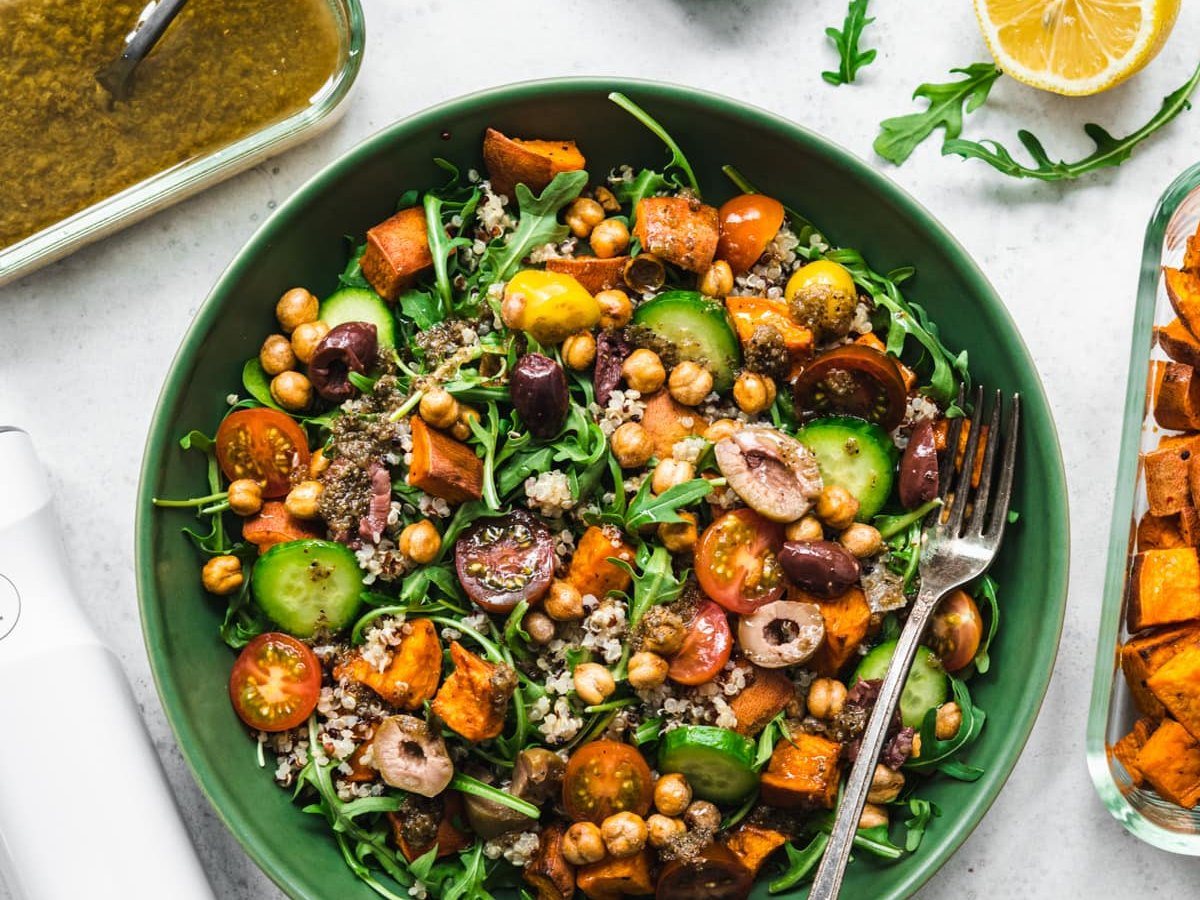
A balanced plate is a habit, not a calculation. This is a framework you can keep on a busy weekday, with no weighing, no guilt and no forbidden foods.
Balance is a pattern, not a scorecard
Most people who struggle with food are not short of information. They are short of a framework that survives a real week of work, family and low-energy evenings. Counting every bite demands attention you do not always have. A balanced plate asks far less of you.
The gentle plate framework
Picture your plate in rough thirds rather than precise grams. Nothing needs weighing, and nothing is banned.
- Colour and fibre: vegetables and fruit, in whatever form you enjoy and can prepare without friction.
- Protein: beans, lentils, eggs, fish, poultry, tofu, dairy or whatever fits your preferences, at each main meal.
- Slow energy: whole grains, potatoes, rice, oats or bread, sized to how active your day is.
- Healthy fats: olive oil, nuts, seeds, avocado, in amounts that make food taste good.
Around the plate sit water, herbs and spices, and the pleasure of eating with people you like. Those are not optional extras; they are part of the plan.
Why protein deserves your attention
Protein keeps you satisfied for longer and helps protect muscle, particularly as you get older or while you are losing weight. Spreading it across the day works better than saving it all for the evening. Breakfast is usually the meal with the most room for improvement.
Build meals that assemble themselves
The most sustainable nutrition plan is one that requires almost no decisions at the end of a long day. Keep a base, a protein and a sauce ready, and dinner becomes assembly rather than invention.
- A grain or potato base, cooked in a larger batch
- A protein that is already prepared, such as beans, eggs or roasted chicken
- Something raw and crunchy for freshness
- A sauce or dressing that makes you want to eat it
If a way of eating makes you miserable, it is not a long-term plan. It is a short experiment with an expiry date.
What about snacks and treats?
Enjoy them. Structured restriction usually rebounds. What helps is making treats an occasion rather than a background habit: sitting down, noticing it, and then moving on without guilt or compensation.
Hydration, simply
Keep water where you can see it and drink with meals. Thirst is easily mistaken for hunger, and mild dehydration shows up as tiredness long before it shows up as thirst.
When to ask for help
If food has become a source of anxiety, if your weight is changing without explanation, or if a health condition makes ordinary eating complicated, personalised guidance is worth far more than another article. Our wellness and nutrition service builds plans around your body, your culture and your kitchen.
This article is general guidance, not a diagnosis. If something worries you, please speak with a clinician who knows your history.